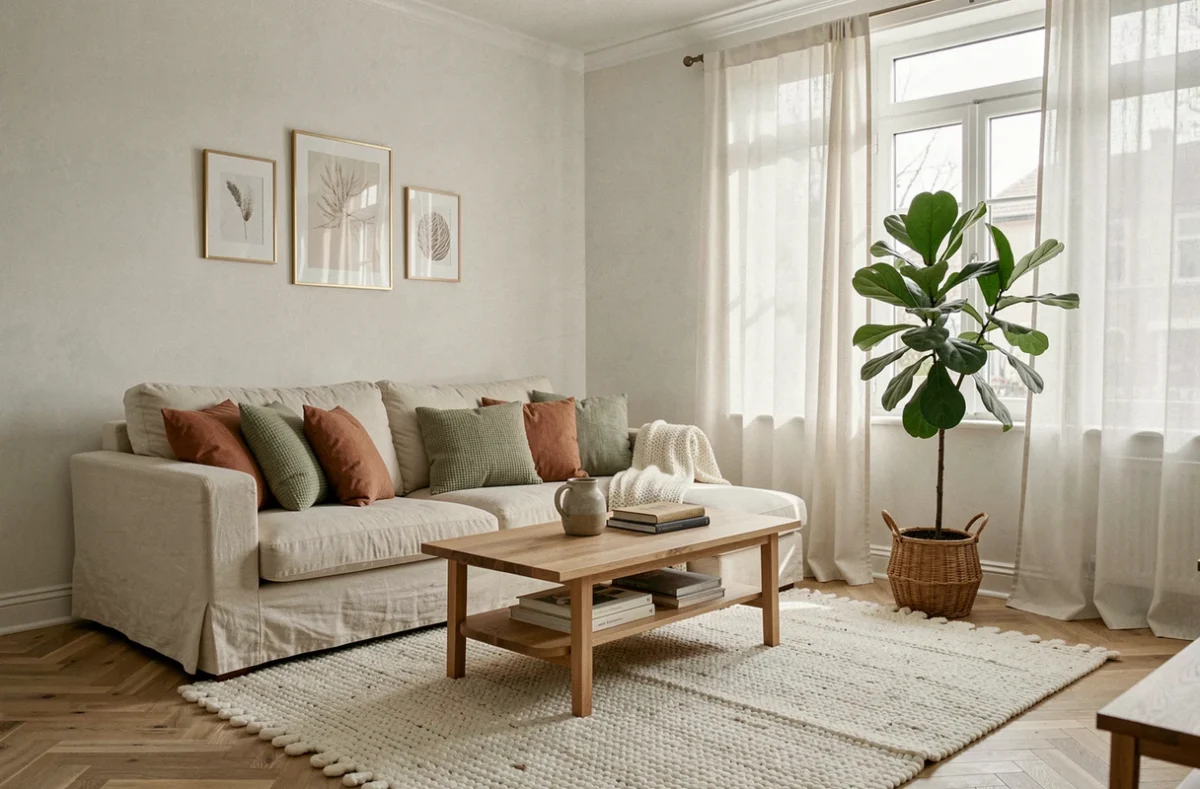
Decorating a home often means choosing between what looks good and what works in the space available. Décor ideas, color choices, furniture layout: every decision changes how a room feels, how comfortable it is, and how visually cohesive it looks. Rather than piling on generic tips, this article compares the factors that genuinely shape the harmony of an interior and assesses their relative impact.
Color, lighting and furniture: which has the greatest impact on a room’s atmosphere?
The three factors most often mentioned in interior design guides are the color palette, lighting and choice of furniture. Their respective influence depends on the room’s layout, as well as how it is used.
| Factor | Impact on how the space is perceived | Ease of change | Relative cost |
|---|---|---|---|
| Color palette (walls, textiles) | Changes the perceived depth and ambient brightness | High (paint, covers, curtains) | Low to moderate |
| Lighting (natural + artificial) | Defines activity zones and the overall atmosphere | Moderate (adding light sources, modifying openings) | Moderate |
| Furniture (size, materials, layout) | Shapes circulation and defines visual proportions | Low (purchase, transport, space required) | High |
You can change a wall color in a weekend. Moving a three-seat sofa or replacing a dining table takes considerably more money and effort. This imbalance explains why color remains the most accessible way to transform an interior without undertaking major renovations.
Lighting falls somewhere in between. Adding more light sources (a table lamp, string lights, a reading lamp) can dramatically change the atmosphere of a living room or bedroom for a modest investment. By contrast, enlarging a window or installing a skylight requires renovation work.
Several online resources explore these choices room by room: Zen et Déco’s home section includes practical guides on layouts and color combinations.
Color harmony throughout the home: beyond the color wheel
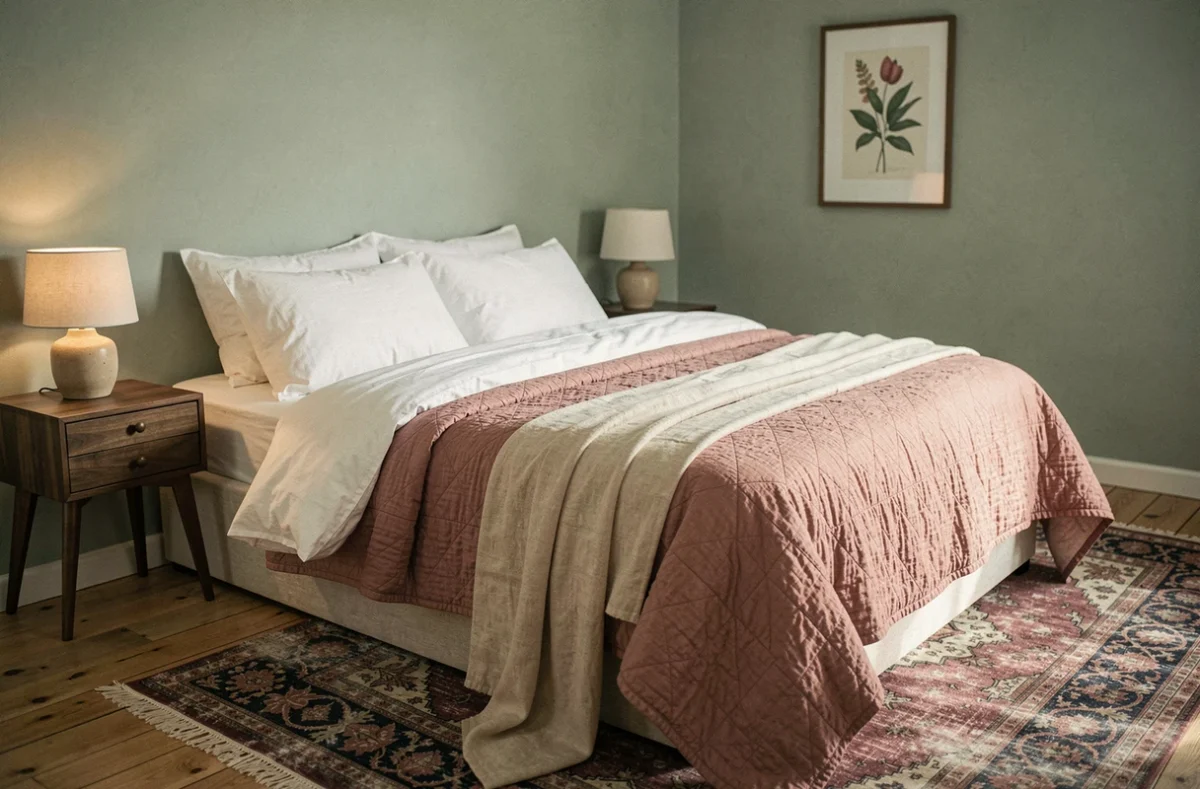
Decorating guides often recommend limiting each room to three colors. This rule serves as a useful safeguard, but it says nothing about how one room transitions into the next.
A harmonious interior also depends on continuity between spaces. A hallway painted in a neutral shade can connect a living room with muted walls to a brighter kitchen. Harmony is created between rooms, not just within each one.
Saturation and brightness matter more than hue
Not all blues have the same effect: a desaturated pastel blue makes a room look larger, while a saturated teal blue makes it feel closer. The deciding factors are not the color family, but its saturation and brightness relative to the surrounding surfaces.
Painting a single wall in a bold color creates a focal point that draws the eye. The rest of the room, decorated in neutral or complementary low-saturation shades, recedes into the background. One accent wall is enough to give a space structure without overwhelming it.
- Test the color on a sample at least 50 cm x 50 cm, and observe it at different times of day, since natural light changes how the shade looks
- Include the floor as a color in its own right when planning the palette: light oak flooring makes a room feel warmer, while gray polished concrete makes it feel cooler
- Use textiles (curtains, cushions, rugs) as seasonal accents that are easier to change than wall paint
Furniture layout and proportions: mistakes that throw off the balance
An oversized piece of furniture in a medium-sized room creates an imbalance that neither color nor lighting can compensate for. The balance between clear floor space and the area taken up by furniture determines how spacious a room feels.
Interior designers generally recommend leaving around 60 to 80 cm between pieces of furniture for comfortable passage. Less than that can make a room feel cluttered, even if it is well decorated.
Living room furniture layouts: comparing two options
Placing a sofa against the wall frees up the center of the room. This layout works well in small spaces, but can create a corridor effect in a long living room.
Positioning the sofa perpendicular to the wall, or slightly away from it, creates a more intimate conversation area and breaks up the linear layout. A sofa pulled away from the wall works better in open-plan living spaces, where it acts as a visual divider between the living and dining areas.
Reusing furniture: an underrated way to create a distinctive style
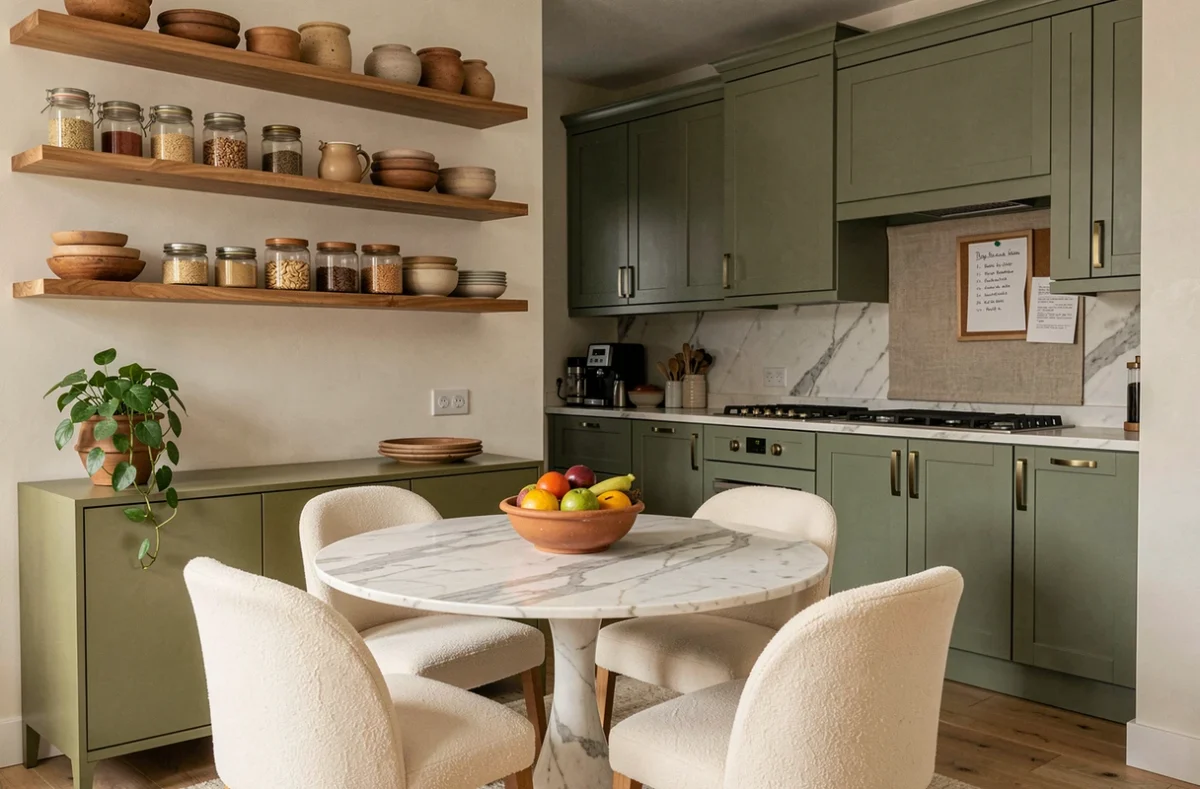
Furniture reuse goes beyond simply shopping at flea markets. The 2024–2029 specifications for France’s extended producer responsibility scheme for furniture strengthen initiatives focused on repair and giving furniture a second life. This regulatory framework supports a trend that is already well established: finding an antique sideboard or reupholstering an armchair adds character that standardized new furniture cannot replicate.
Reused furniture adds a distinctive touch that is hard to achieve any other way. Pairing a solid wood table from the 1960s with contemporary chairs creates a contrast in styles that instantly gives a room personality.
- Check the structural integrity (joints, legs, hinges) before buying: a patina cannot make up for a wobbly piece of furniture
- Set aside a restoration budget (sanding, varnishing, replacing fabric), which is generally lower than the cost of buying new furniture made from wood of comparable quality
- Choose one standout vintage piece per room to avoid a cluttered look that makes the overall design harder to read
Indoor air quality is also worth considering when choosing materials. Anses and the Indoor Air Quality Observatory identify furniture materials as potential sources of pollutants in enclosed spaces. Choosing solid wood furniture or certified textiles can limit emissions of volatile compounds—a factor rarely considered in traditional decorating guides.
Creating a harmonious interior depends less on accumulating décor ideas than on prioritizing three factors: the color palette for the mood, lighting for the atmosphere, and furniture for the structure. Changing just one of these factors in the right order produces a more cohesive result than changing everything at once.