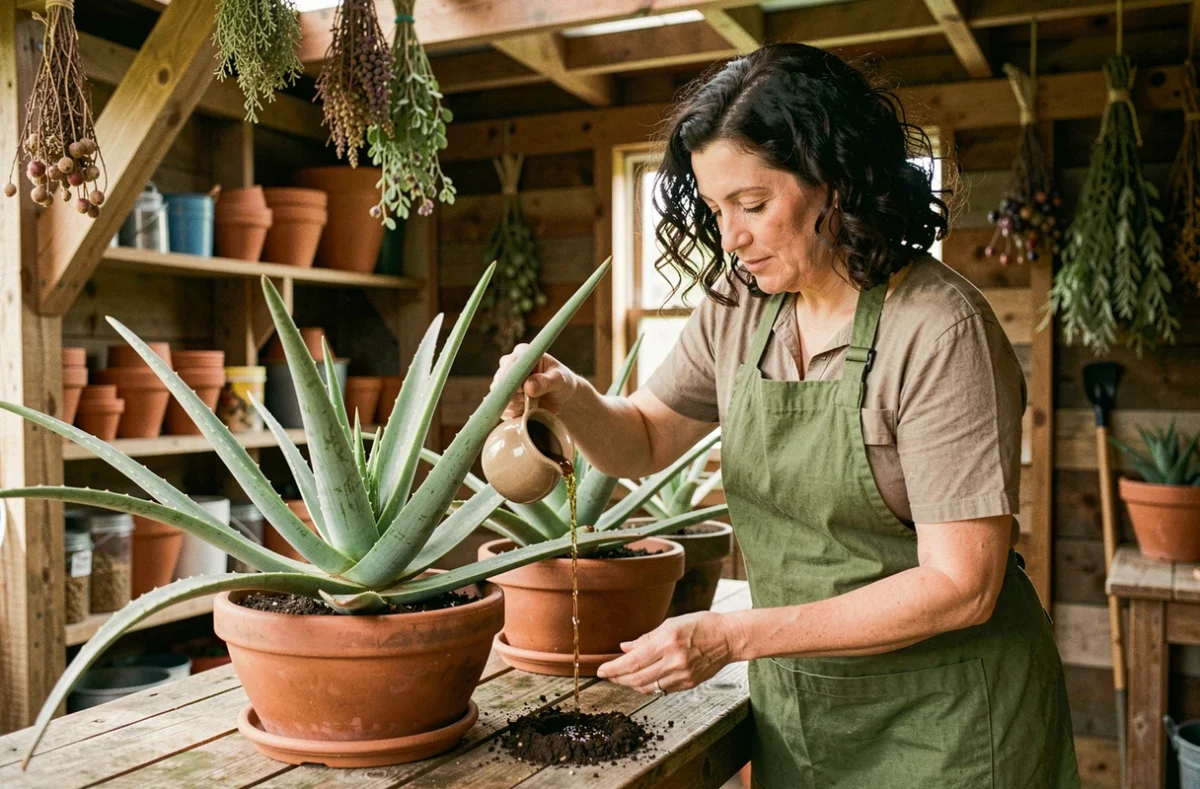
Aloe vera is a succulent plant whose roots poorly tolerate excess nutrients. Its shallow root system absorbs mineral elements slowly, making any concentrated chemical fertilization risky for tissue integrity. Natural fertilizers, diluted and gradual, are better suited to this frugal metabolism.
Drainage and light before fertilization: the true growth levers for aloe vera
Before looking for which fertilizer to provide, check that the basic conditions are met. Fertilization does not compensate for poor drainage or lack of light. A recent horticultural source confirms this: light, drainage, and watering matter more than intensive fertilization.
The pot must have a drainage hole, and the substrate should allow water to flow out in a few seconds. A mix of potting soil and coarse sand (or perlite) replicates the arid soils where aloe vera naturally thrives. Without this drainage, the roots stagnate in moisture, and no nutrient supply will save the rot that sets in.
For light, place the plant near a south or west-facing window. An aloe vera that lacks light becomes leggy: its leaves thin out and pale. Correcting this stretching requires repositioning, not an extra dose of fertilizer. Once these two parameters are stabilized, you can naturally boost aloe vera on Le Jardinier Décorateur by introducing an appropriate organic input.
Natural fertilizers suitable for aloe vera: which to choose and why
Not all organic amendments are suitable for succulent plants. Aloe vera needs low doses of nitrogen and a balanced supply of potassium and phosphorus to strengthen its leaves and root system.
Cooking water and rinsing water from rice
Vegetable cooking water (unsalted) contains traces of potassium and minerals released during cooking. Rice rinsing water, on the other hand, provides starch and small amounts of phosphorus. These waters can be poured directly into the pot at room temperature, replacing a traditional watering.
The main advantage is the absence of overdose risk. The nutrient concentration remains very low, which perfectly matches aloe vera’s limited tolerance.
Diluted coffee grounds
Used coffee grounds slightly acidify the substrate and release nitrogen, magnesium, and potassium over time. For a potted indoor aloe vera, it’s better to dilute it in the watering water rather than placing it on the surface, where it can form a compact crust that retains moisture.
Use one teaspoon of grounds for one liter of water. Let it steep overnight, strain, and then water. This method prevents the accumulation of dense organic matter around the plant’s collar.
Banana peel infusion
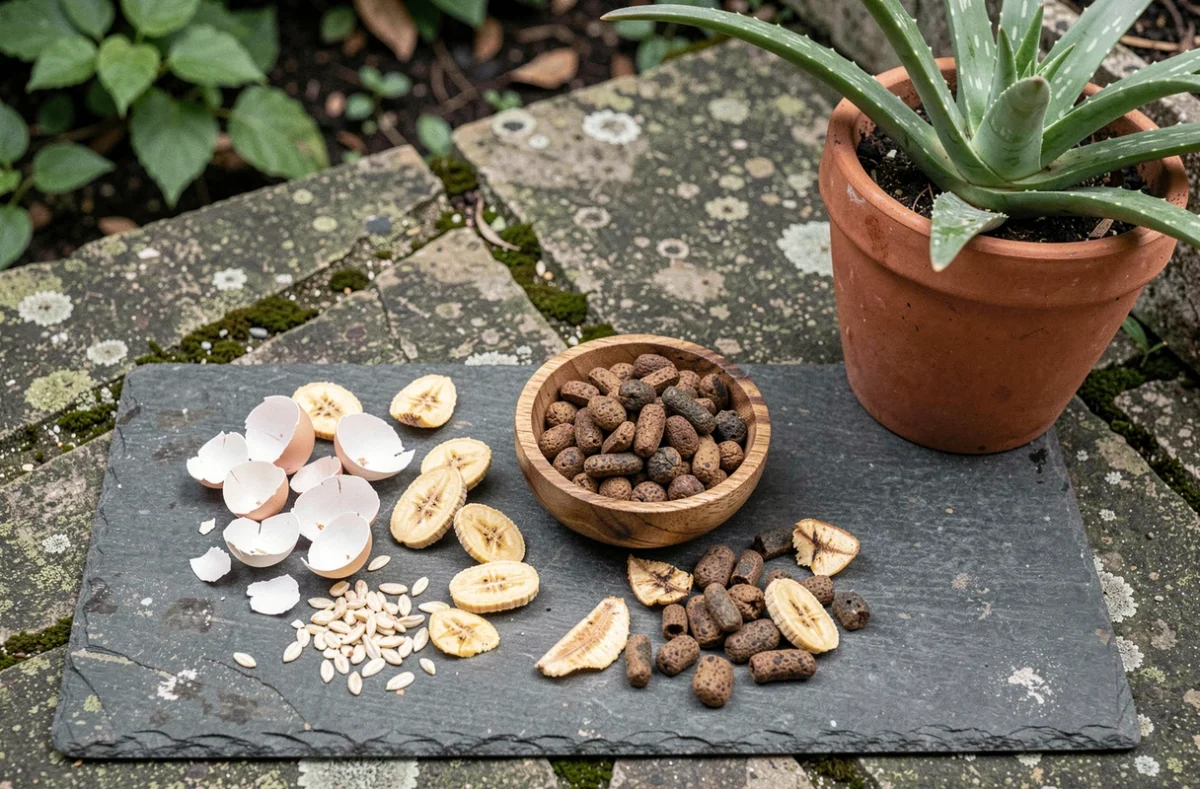
Banana peels are rich in potassium, an element that promotes cellular rigidity in leaves. Cut two or three peels into one liter of water, let them macerate for two to three days, then strain the liquid. Potassium strengthens the turgor of fleshy leaves, helping aloe vera maintain its upright posture.
Mature compost in small quantities
Well-decomposed compost, applied as a thin layer on the surface of the pot, releases nutrients gradually. The key is moderation: a handful is sufficient for a standard-sized pot. An excess of compost alters the water retention of the substrate and can cause root congestion.
Fertilization schedule: when and how often to feed aloe vera
Aloe vera enters partial dormancy when light and temperature drop. All fertilization should focus on the active growth period, from spring to early autumn.
The University of Arizona recommends a light application in spring. West Virginia University advises fertilizing only a few times during the warm months, at half strength. Both recommendations converge on a simple principle: less is more.
In practice, here is an applicable schedule:
- A first application at the beginning of spring, when new shoots appear, using one of the natural fertilizers described above.
- A second application in early summer, still at a reduced dose (dilution to half of what you would use for a regular green plant).
- A third optional application at the end of summer if the plant shows signs of active growth: new leaves, lateral shoots.
- No applications between October and March. The plant slows down, its roots absorb little, and unused nutrients accumulate in the soil.
Signs of overdose and common mistakes with fertilizer on aloe vera
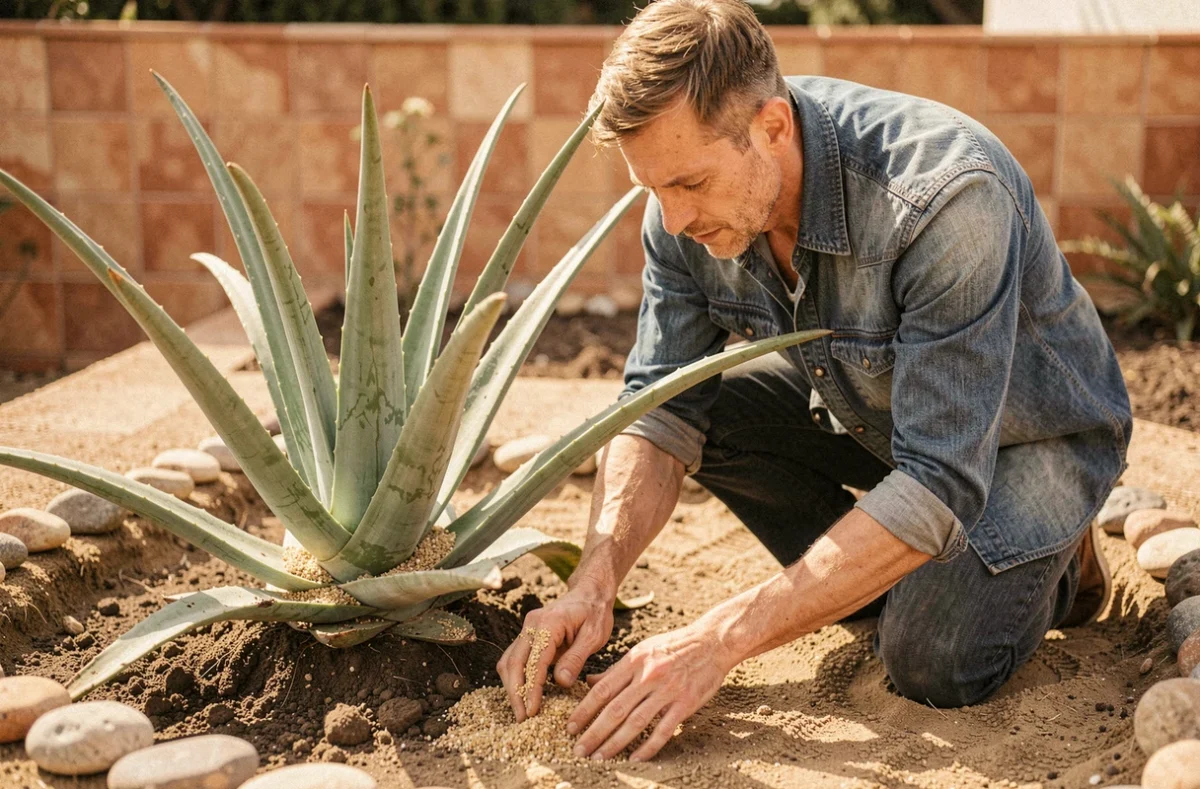
An over-fertilized aloe vera shows visible symptoms. The tips of the leaves turn brown and dry out, sometimes in just a few days. White deposits on the surface of the substrate indicate an accumulation of mineral salts.
If these signs appear, rinse the substrate thoroughly by letting water flow through the pot for several minutes. This technique, sometimes called leaching, removes excess salts. Then wait several weeks before any new application.
Three common mistakes occur frequently:
- Using a liquid fertilizer for green plants at full strength. These products are formulated for fast-growing plants, not for succulents.
- Fertilizing a plant that has just been repotted. The fresh substrate already contains nutrients; an immediate addition doubles the load.
- Confusing fertilizer with biostimulant. European regulation 2019/1009 distinguishes these two categories: a fertilizer provides nutrients, while a biostimulant stimulates the plant’s natural processes without directly feeding it. Products based on algae or humic acids sold in garden centers often fall into the latter category.
Aloe vera grown in the ground in a suitable climate can do without fertilization entirely once established. In a potted indoor setting, the soil gradually depletes, justifying moderate input, but the reflex to fertilize regularly remains the primary cause of damage to this plant. A few enriched waterings per year are sufficient to maintain dense, fleshy foliage.