You correct your pool’s pH with sulfuric acid and the process seems routine. Yet this product is a strong mineral acid: incorrect dosing, a splash or even simply inhaling the fumes can cause injuries that appear long after handling. Understanding what happens as you pour it, and then in the pool water, changes how you approach maintenance.
Acid mists and pulmonary edema: the invisible danger of dosing
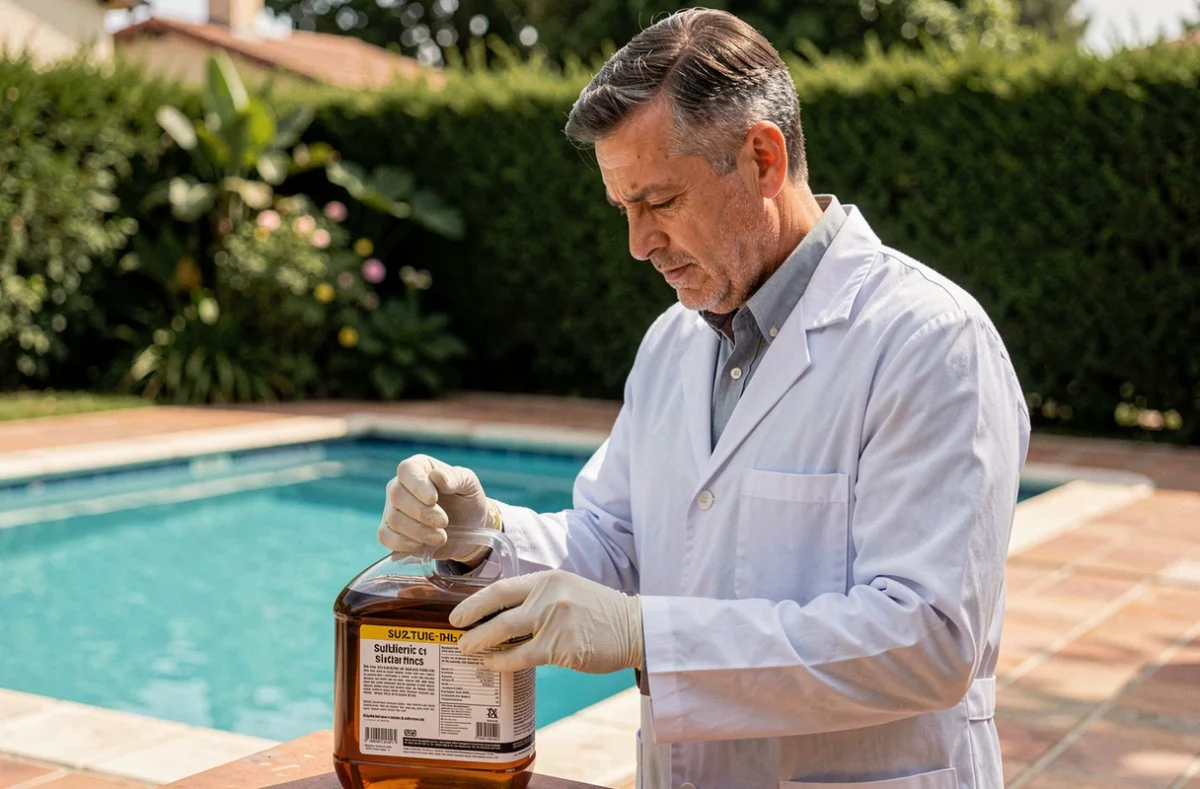
The most underestimated risk comes not from skin contact, but from the air you breathe while pouring. When concentrated sulfuric acid comes into contact with water, the exothermic reaction releases acid mists. These airborne microdroplets irritate the respiratory tract, even outdoors.
CNESST, Quebec’s occupational health and safety organization, describes this mechanism in detail: inhaling sulfuric acid mists causes coughing, irritation and breathing difficulties. Signs of pulmonary edema can appear up to 48 hours after exposure, even if the initial discomfort seemed mild. Someone who coughs slightly after pouring the product may therefore think they are in the clear when they are not.
This delay makes the situation tricky. It is important to distinguish between three scenarios, each of which calls for a different response:
- A splash on the skin requires thorough rinsing with clean water for at least fifteen minutes, without rubbing
- A splash in the eyes requires the same prolonged rinsing, followed by prompt medical attention from an eye specialist
- Inhaling fumes or mists, even briefly, warrants medical monitoring, even if there are no immediate symptoms
It is best to learn about the risks of using sulfuric acid in a swimming pool before handling the product for the first time. Most household incidents happen during first-time use, without protective equipment.
Sulfuric acid and pool equipment: accelerated corrosion of the liner and seals
Water pH acts like a dial. If it is too low, it attacks materials. Sulfuric acid, a powerful pH adjuster, can make the pH drop very quickly if the dosage is imprecise.
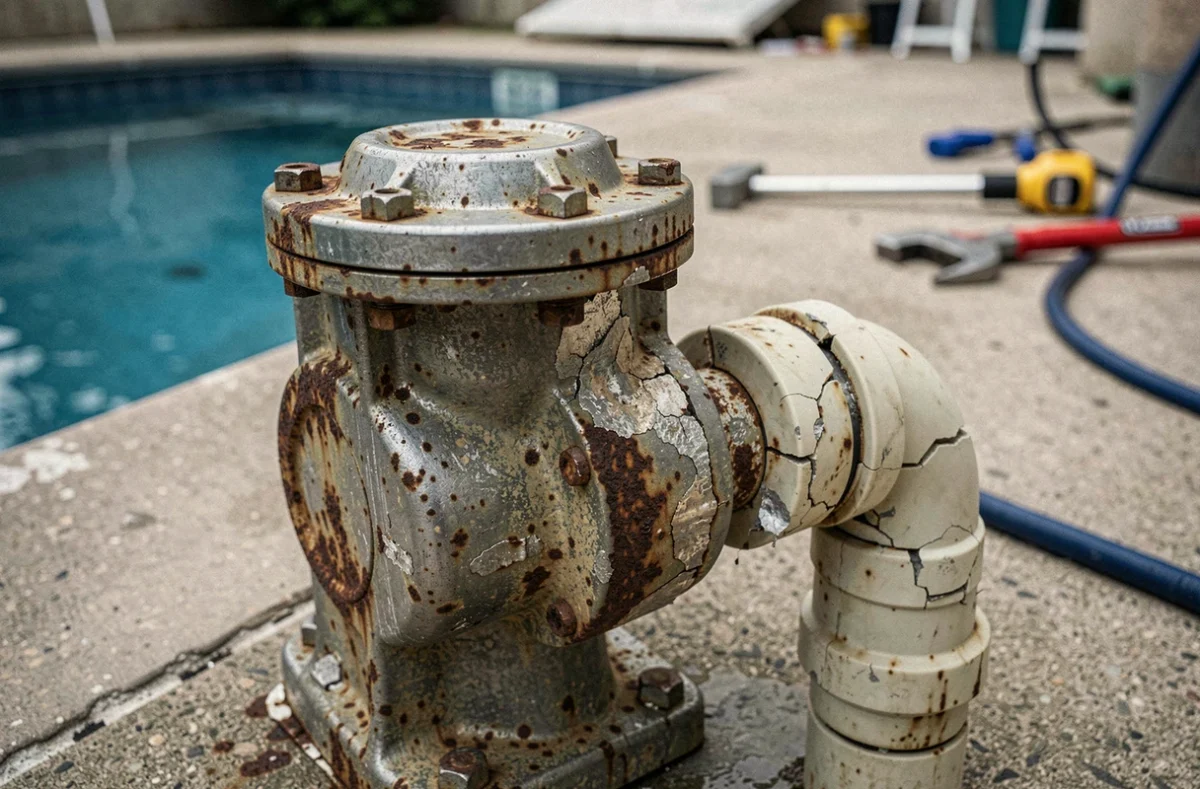
A PVC liner can only tolerate a narrow pH range. Below that range, the plasticizer leaches out of the material. The liner becomes brittle, discolours and loses its watertightness within a few seasons, rather than lasting its normal lifespan. Tile grout, metal parts in the filtration system and heat exchangers are affected by the same process.
Have you noticed whitish stains on the walls after shock treatment? This is often a sign that the pH remained too acidic for several hours. Sulfuric acid does not disperse instantly throughout the water. If poured too quickly or in the wrong place, it creates pockets of concentrated acid that eat away at the surface before diluting.
How to limit the damage
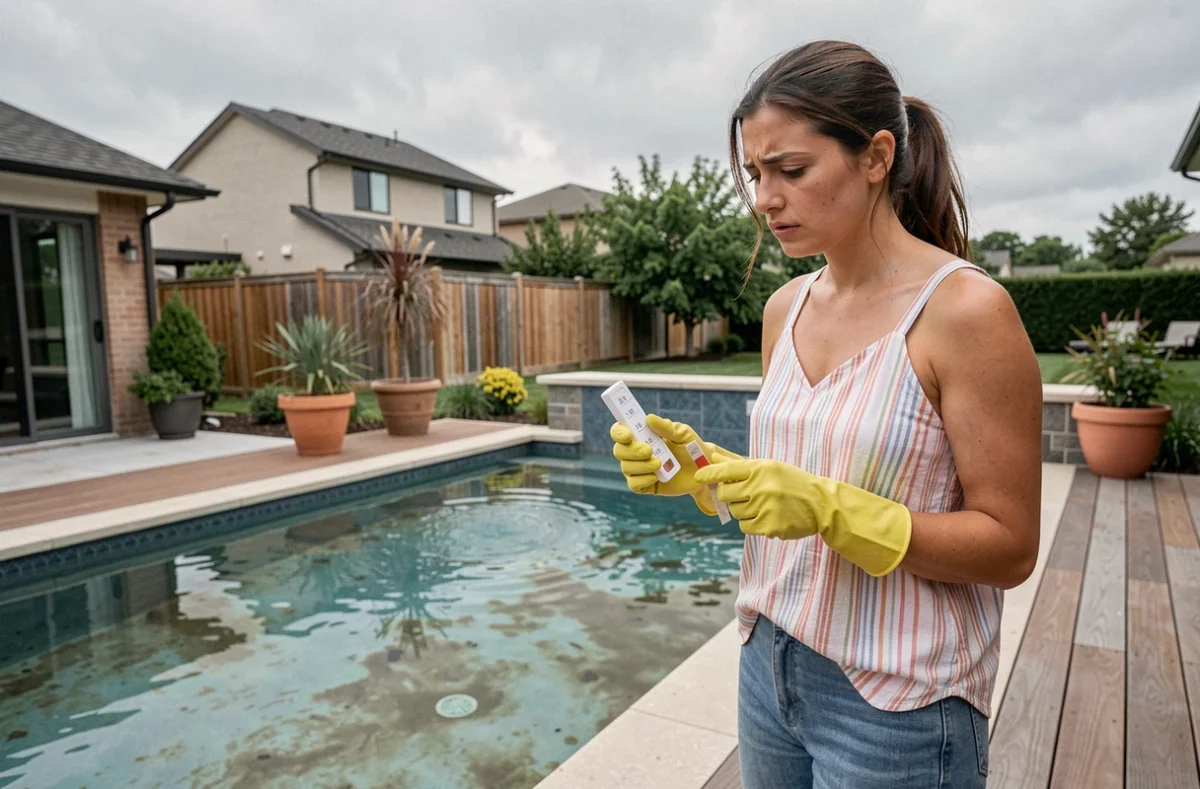
Always pour the acid into the water, never the other way around, in a thin stream in front of a return jet to help it dilute. Wait at least an hour before measuring the pH again. Standard test strips are not precise enough in the critical range: an electronic tester provides a reliable reading to two decimal places, helping prevent repeated corrective treatments.
Public pools and sulfuric acid: a regulatory framework distinct from that for private pools
Online dosing advice is almost always intended for private pool owners. For a pool open to the public (hotel, campsite, condominium or aquatic centre), the rules are different.
Article D. 1332-2 of the French Public Health Code requires that water must not irritate the eyes, skin or mucous membranes. It also sets quality limits and reference values. A pH adjuster therefore cannot be assessed on its own: what matters is the result in the pool, verified through regular, traceable testing.
The French regulatory framework for public pools changed in late 2025. These changes strengthen water quality monitoring and the traceability of chemical treatments. In practice, this means:
- Every chemical addition must be recorded in a health log, including the time, volume and pH test results before and after treatment
- Products used must be approved for treating water intended for swimming, which is not necessarily the case for all commercially available sulfuric acid
- Staff handling the products must have suitable personal protective equipment (splash-proof goggles, acid-resistant gloves and an apron)
- An automatic pH control system is strongly recommended to prevent manual overdosing
A campsite manager who pours sulfuric acid bought from a supermarket into a shared pool may face a compliance issue, even if the displayed pH appears correct. Product and treatment traceability matter just as much as the result.
Private pools: freedom guided by common sense
Private pool owners are not required to keep a health log. Responsibility rests entirely with the owner. If a guest suffers a chemical burn caused by overdosing, negligence may become an issue. Storing sulfuric acid in a ventilated area, out of children’s reach and in its original sealed container is the bare minimum.
Alternatives to sulfuric acid pH reducer: which product should you choose to adjust pH?
Sulfuric acid is not the only pH adjuster available. Hydrochloric acid (often sold as liquid “pH minus” for pools) is another common option. It works quickly, but releases hydrogen chloride fumes that are even more irritating.
Sodium bisulfate (powdered pH reducer) allows for more gradual dosing and reduces the risk of inhalation. It dissolves more slowly, which limits pockets of concentrated acid. For pools equipped with an automatic controller, liquid pH reducer remains the standard, but the tank should be installed in a ventilated plant room on a spill containment tray.
The choice of product depends on three practical factors: pool volume, how often pH adjustments are needed, and whether an automatic control system is installed. A small pool that is adjusted manually once a week does not warrant handling a concentrated acid. Sodium bisulfate, which is less hazardous to store and dose, meets this need without exposing the user to the same risks.
No pool chemical is harmless, whatever its commercial name. Water pH remains the key parameter to monitor, and how you adjust it matters just as much as the reading on the test strip.