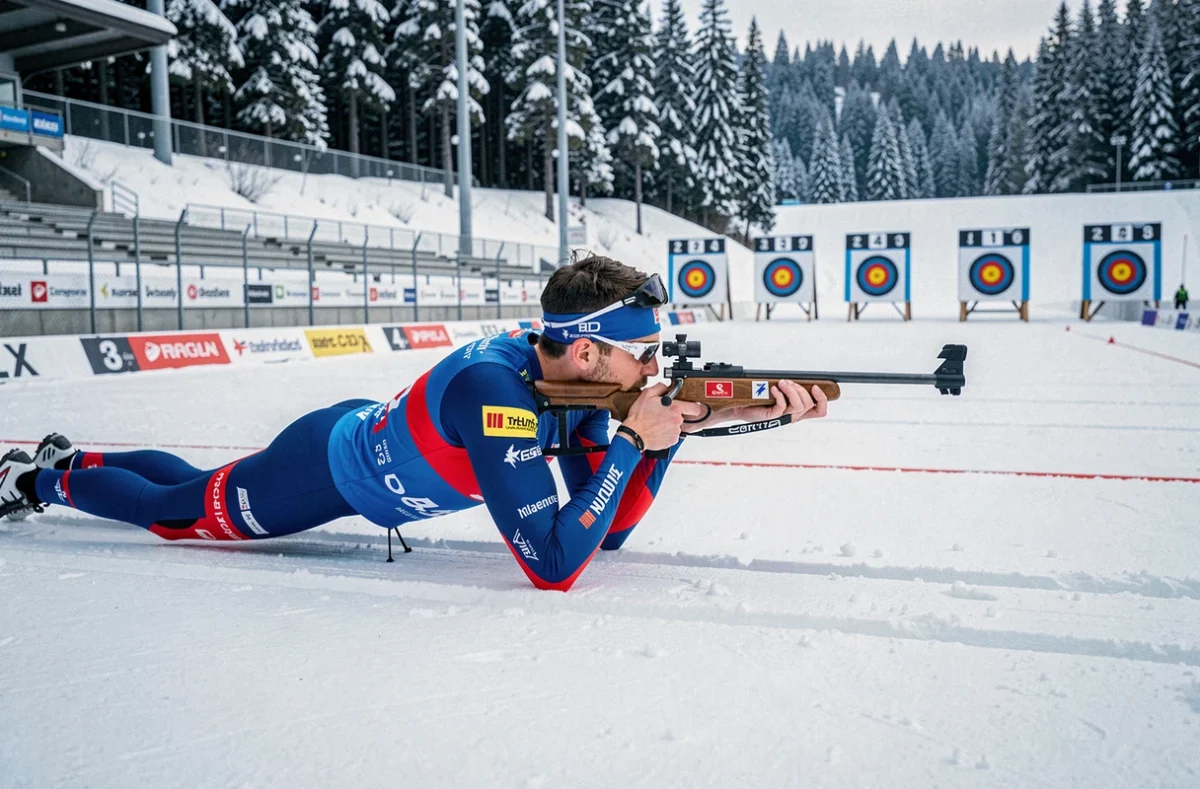
When you open a scores app on a Saturday morning in December to check whether the women’s sprint has started yet, the time zone and race format make all the difference. Following biathlon live is about more than finding a video stream: you need to know when to watch, which platform to use, and how to make sense of the results as they come in during the race.
Time differences and broadcast times for live biathlon
The Biathlon World Cup takes place at venues across Scandinavia, Central Europe and, at times, Estonia. Each stop has its own start times, often scheduled between 10 a.m. and 3 p.m. local time. From France, that can mean a one-hour time difference (Kontiolahti, Finland) or no difference at all (Oberhof, Germany).
To avoid missing a race, check the live biathlon schedule for today the night before and note the start time in French time. Sprints are generally held in the morning, pursuits in the early afternoon, and relays at the end of a World Cup stop’s schedule. Start times vary from one stop to another, even for the same race format.
A common pitfall: mass starts and mixed relays are sometimes rescheduled due to difficult weather conditions (strong winds or fog at the shooting range). Live results apps update these changes, but TV channels adjust their schedules with a delay.
2026-2027 calendar: key events to look out for
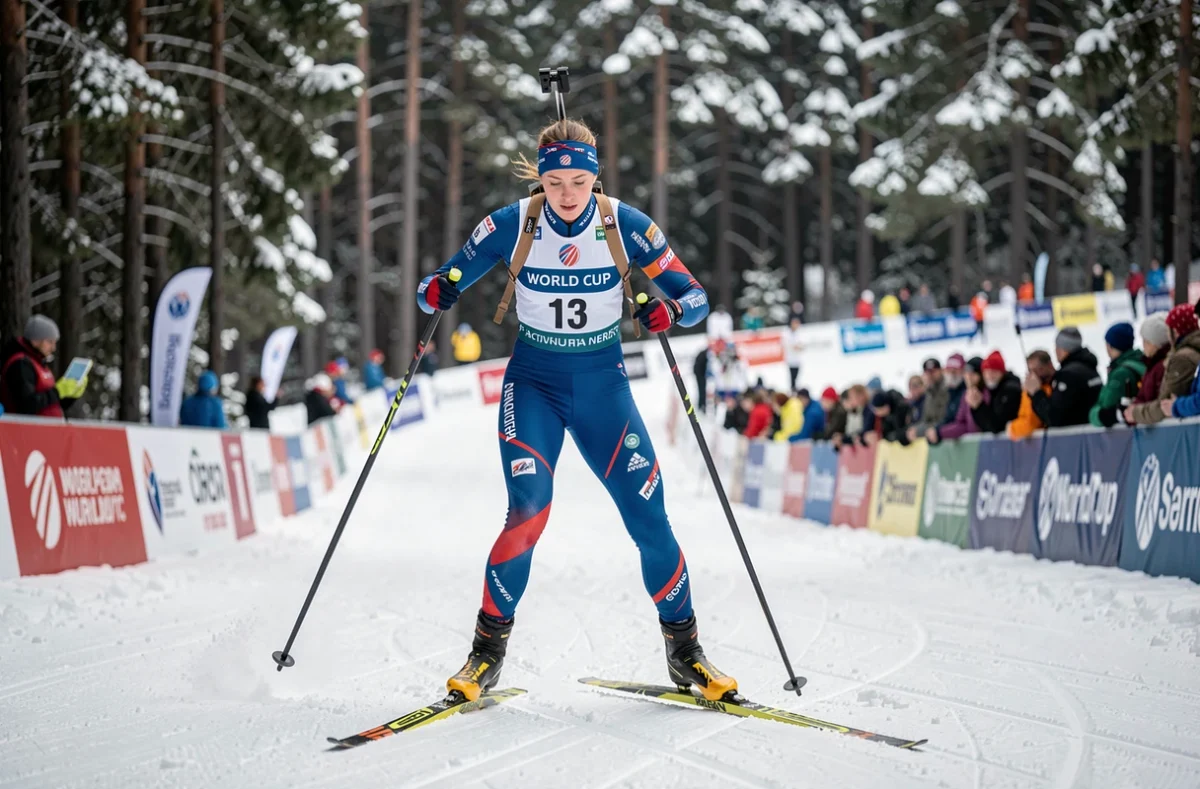
The 2026-2027 World Cup season is set to begin in Kontiolahti on November 26, 2026. This Finnish event traditionally opens the circuit, with races on natural snow and temperatures often below freezing. Pokljuka, in Slovenia, is scheduled just after New Year’s, while Oberhof hosts its event in early March rather than January, shifting the usual schedule.
The season’s highlight will be the 2027 World Championships, scheduled to take place in Otepää, Estonia, from February 10 to 21, 2027. This will be the first time the IBU has held its World Championships in the country. For spectators, that means the same time zone as Finland (one hour ahead of Paris).
The season doesn’t end with the World Championships
After Otepää, the calendar includes further stops in Oberhof, Östersund and Oslo-Holmenkollen in March 2027. The final races often decide the overall standings, as the gaps between contenders for the crystal globe narrow. Stopping your coverage after the World Championships means missing the circuit’s conclusion.
Live results: understanding what you see on screen
On an app such as Flashscore or the IBU website, live results show several columns at once. During a sprint, you can see ski time, the number of misses in prone shooting, then standing shooting, and total time including penalties. Each missed shot adds a penalty loop to the course.
Here’s what to watch to quickly make sense of a live race:
- Ski time, which shows the biathlete’s physical form regardless of shooting. A fast skier with two misses can still make the podium if their speed on the course makes up for it.
- Shooting accuracy, shown live as black dots (hit targets) or white dots (misses). Five black dots out of five means a clean shoot at that visit to the range.
- Time gaps to the leader, updated at each intermediate checkpoint on the course. In a pursuit, these gaps change in real time, letting you see overtakes before the camera even shows them.
In relays, one additional statistic appears: the number of spare rounds used. Each biathlete has three extra rounds for each shooting bout. If all three are used and there are still targets left standing, the team’s next relay leg must ski a penalty loop, costing around twenty seconds.
Platforms and tools for following biathlon events
The best platform depends on what you’re looking for: the visual spectacle or the raw data. You won’t always find both in the same place.
- TV is still the best option for live commentary. In France, World Cup events are regularly broadcast on public-service channels or paid sports platforms. Exact broadcast times vary depending on the rights agreements signed each season.
- The official IBU website (biathlonworld.com) offers a real-time tracker showing biathletes’ GPS positions on the course, intermediate times and shooting results. It’s the most comprehensive tool for following the standings during a race.
- Sports results apps (Flashscore, L’Equipe) send notifications when each race ends and update the men’s and women’s overall World Cup standings.
- Specialist sites such as Biathlon Live cover the French teams and the IBU Cup and Junior Cup circuits, with post-race analysis and interviews.
IBU standings: the crystal globe and discipline rankings
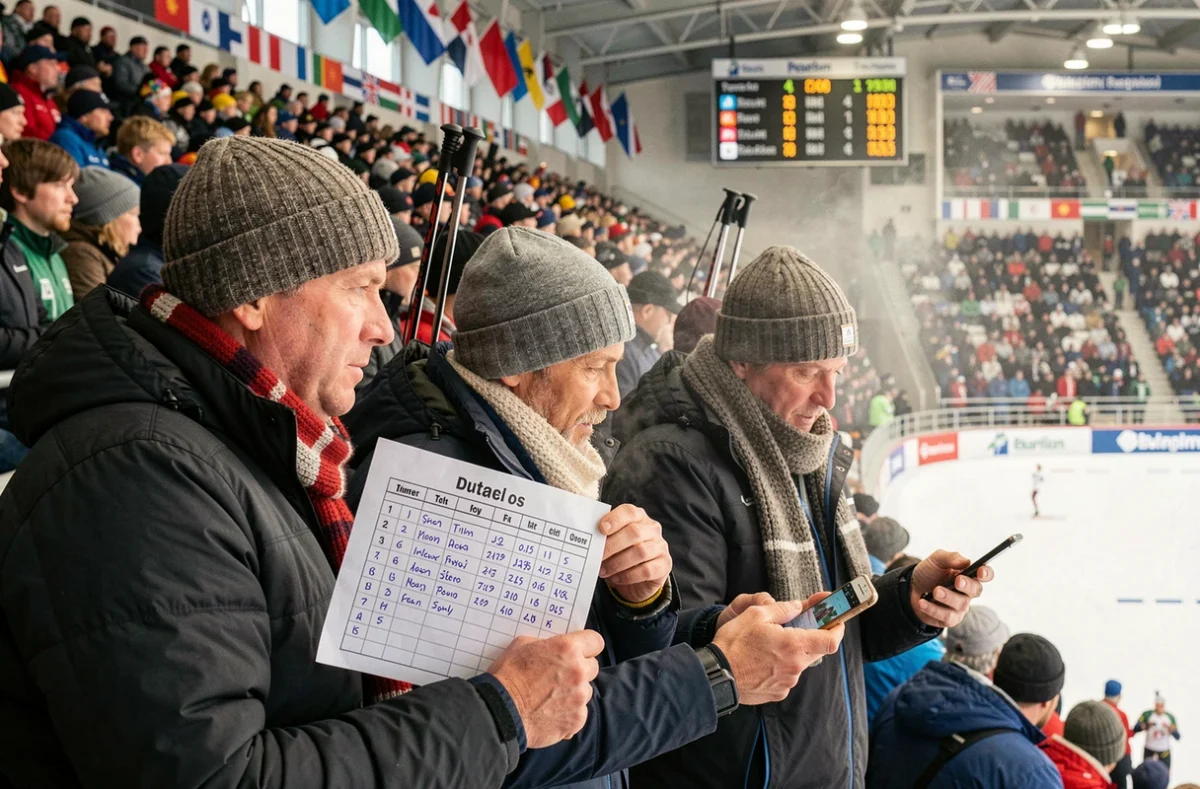
Biathlon awards an overall title (the crystal globe) as well as discipline titles for the sprint, pursuit, individual, mass start and relay. Each race awards points based on finishing position. The standings are updated after every stop on the IBU website and are also published by Eurosport and scores apps.
To track an athlete’s progress throughout the season, check the discipline rankings rather than the overall standings. A biathlete can dominate the sprints without ever winning the crystal globe if their individual or mass-start results bring down their total points.
The 2026-2027 season looks set to be packed, with the World Championships in Estonia and the circuit continuing through to Oslo in March. Set alerts for event dates and check the start times the night before each race to avoid stumbling across the results by accident on social media.