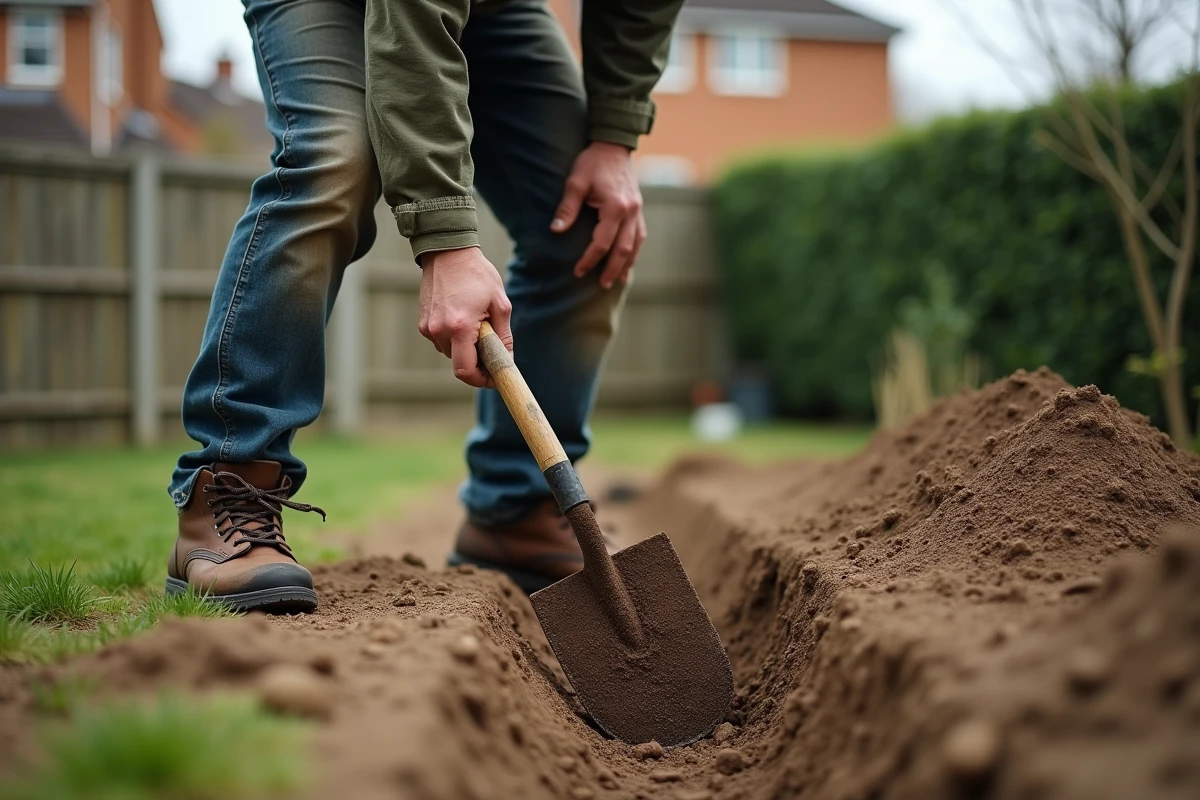
Digging a hole with a shovel engages the back, shoulders, and legs in a coordinated effort that, if poorly executed, tires you more than it yields results. Technique matters more than brute strength: good body positioning and choosing the right tool for the soil can reduce working time compared to improvised digging.
Posture and Digging Technique: What the Soil Demands from the Body
The majority of lower back pain related to digging comes from bending the back without support from the front leg. The foot should rest on top of the blade to drive the shovel vertically, using body weight rather than arm strength.
Keep your hands spaced on the handle: one hand at the top, the other at the lower third. This spacing transforms the handle into a lever, reducing the effort needed to lift the soil. Each scoop should be placed beside the hole, never behind you, to avoid repeated twisting of the torso.
On clay or compact soil, moistening the area the day before softens the top layer and facilitates the blade’s penetration. On rocky terrain, a pry bar or pick prepares the ground before using the shovel. Trying to force a round shovel into hard soil damages the tool and exhausts you unnecessarily.
For those looking to delve deeper into the method, digging a hole with a shovel also requires calibrating the desired depth from the start by planting a graduated stake next to the hole to avoid over-digging.
Choosing Your Shovel According to Soil Type and Hole Shape
Not all shovels do the same job. The choice depends on the nature of the terrain and the shape of the desired hole.
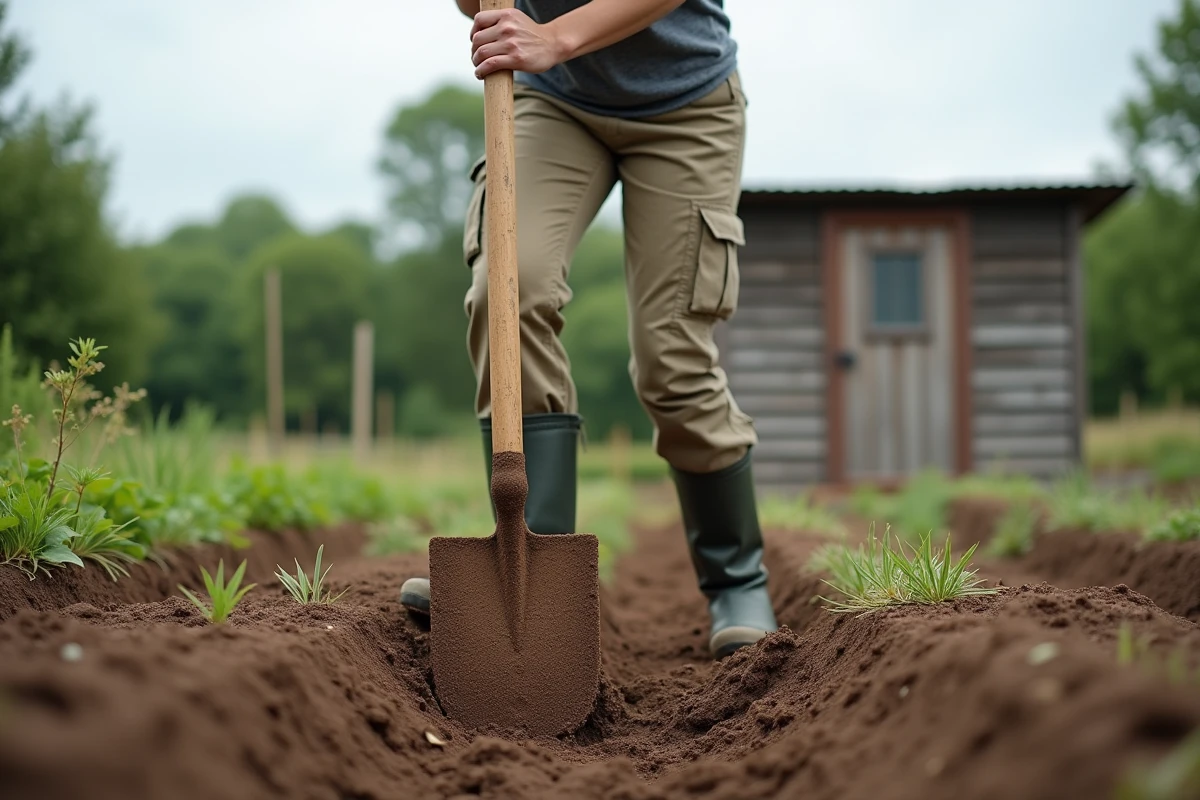
- Round shovel (or digging shovel): curved and pointed blade, designed to penetrate hard and compact soils. It is suitable for deep and narrow holes, such as for posts.
- Square shovel: flat and wide blade, suitable for collecting loose soil or gravel that has already been loosened. It is mainly used to empty a hole or level a bottom.
- Border spade: straight and narrow blade, designed to cut roots and create clean edges in a trench. On garden soil enriched with organic matter, the border spade penetrates better than a round shovel.
- Manual auger: a rotating tool with a screw that drills cylindrical holes for fence posts or tree planting. It reduces the effort on the arms compared to a shovel in loose soil.
A fiberglass handle absorbs vibrations better than a wooden handle and resists moisture. For work lasting more than an hour, this detail changes the comfort of the hands and wrists.
Digging Adapted for Reduced Mobility: Underestimated Ergonomic Tools
Seniors, people suffering from joint pain, or those with partial disabilities often give up manual digging due to a lack of suitable tools. However, several solutions exist and deserve to be known.
Telescopic Handle Shovels and Auxiliary Handles
An adjustable height handle allows you to work without bending excessively. Some models include a rotating auxiliary handle halfway down the handle, providing a second point of support and reducing strain on the dominant shoulder.
This intermediate handle changes the mechanics of the action: instead of pulling the handle towards you with your lower back, you push sideways with your forearm. For someone with reduced back mobility, the difference in comfort is noticeable from the first few scoops.
Lever Shovel and Pedal Shovel
The lever shovel (sometimes called an “assisted trench shovel”) operates on a pivot principle: pressing the foot on the pedal drives the blade down, then a lever action of the handle ejects the soil without the user lifting the load. The lifting effort is almost entirely eliminated, making the tool accessible to those unable to lift several kilos of wet soil.
These shovels are still not widely available in traditional garden centers. They are mainly found with manufacturers specializing in adapted gardening tools or on websites for equipment for people with reduced mobility.
Gardening Stool and Kneeling Pad
For shallow holes (planting, small posts), a swiveling gardening stool with armrests allows you to work while seated. Combined with a short shovel or a reinforced trowel, it enables slow but steady digging without straining the knees or back.
Layered Digging Method for a Deep Hole
Digging deep requires a step-by-step approach. Going straight to the final depth creates a hole with unstable walls and laborious soil extraction.
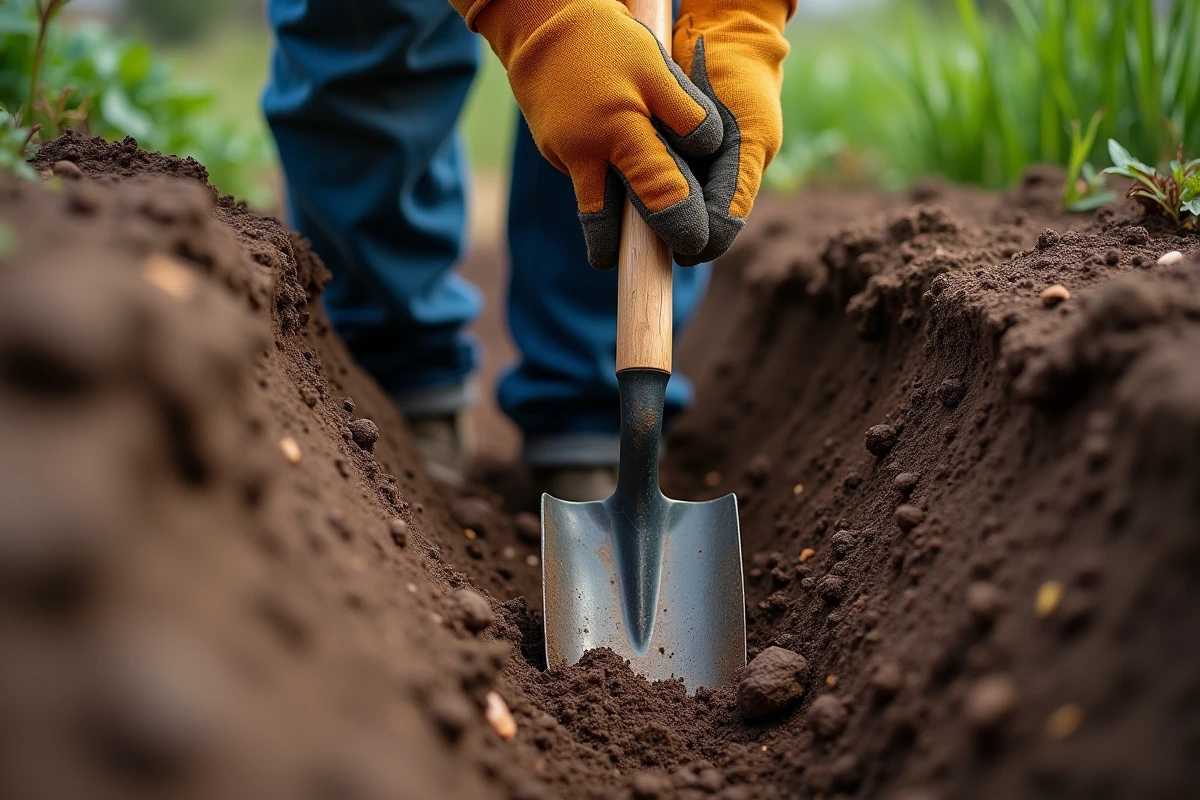
The first layer is removed over the entire surface of the hole, to a depth corresponding to the length of the blade. The soil is deposited in an organized pile on one side. The second layer follows the same perimeter, slightly reducing the diameter to create slightly flared walls that limit collapses.
Alternating between a round shovel and a square shovel for each layer speeds up the work: the round one cuts, the square one evacuates. On mixed soil (topsoil on the surface, clay underneath), this tool change occurs naturally as the soil resistance changes with depth.
Marking the desired depth on the shovel handle with a piece of tape avoids measuring with each scoop. Continuous depth control prevents the need to backfill an overly deep hole, which is a common unnecessary effort for beginners.
Preparing the Work Area Before the First Shovel Stroke
Before starting excavation, check with your local council or land registry for the presence of buried networks (water, gas, electricity, telecommunications). A shovel strike on a gas line is not a theoretical risk.
Define the perimeter of the hole with marking paint or stakes connected by string. This often-overlooked step ensures regular dimensions and prevents digging wider than necessary, which increases the volume of soil to be removed and the backfilling time.
Remove the layer of grass or surface vegetation with a square shovel before attacking the soil deeply. Keep these clumps aside if you plan to replace them after backfilling: they will recover better than seeded grass.
The timing of the work is also important. Soil saturated with water after several days of rain sticks to the blade and weighs down each scoop. Soil that is too dry fractures into compact blocks that are difficult to extract. A slightly moist terrain offers the best compromise between blade penetration and the weight of the lifted soil.