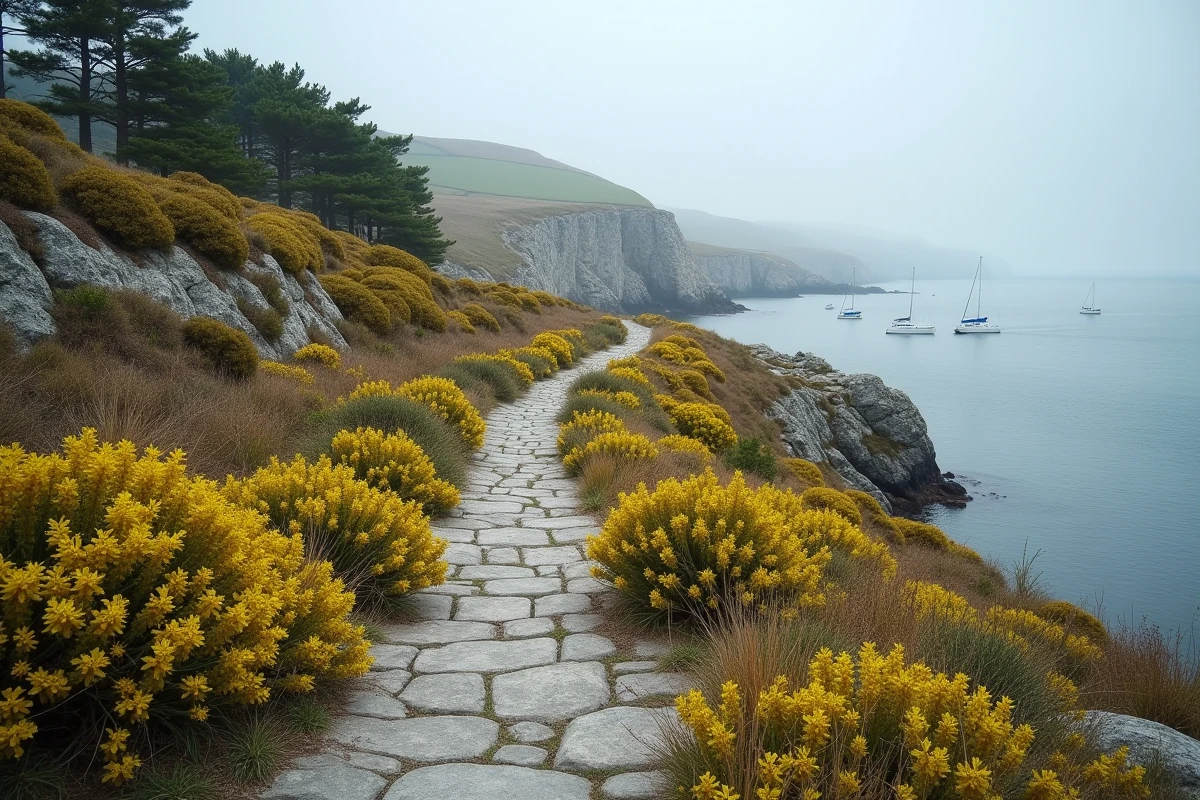
Ploubazlanec is a coastal municipality in the Côtes-d’Armor, adjacent to Paimpol and facing the Bréhat archipelago. Its territory combines a rugged coastline, a maritime heritage linked to deep-sea fishing in Iceland, and one of the richest intertidal biodiversity in the Trégor-Goëlo. This triptych, rarely found in a single Breton municipality, makes it an unknown yet coherent entry point for exploring northern Brittany.
Intertidal Zone and Coastal Geology in Ploubazlanec
The term intertidal zone refers to the area of land exposed between high tide and low tide. In Ploubazlanec, the tidal range reveals a particularly extensive intertidal zone, composed of rocks, sand, and fields of seaweed. This intertidal area is home to a fauna and flora that vary according to tide levels, rocky substrates, and exposure to currents.
The nature trails offered by local guides, such as those from Horizons22, allow visitors to read this landscape layer by layer. Tide pooling remains a practiced activity, regulated by size and quantity rules that protect the resource.
Those wishing to discover Ploubazlanec in Brittany find on the municipal coastline a space for direct observation, without museum mediation, where geology and marine biology are visible in the open air.
Maritime Heritage of Icelandic Fishing in Paimpol and Ploubazlanec
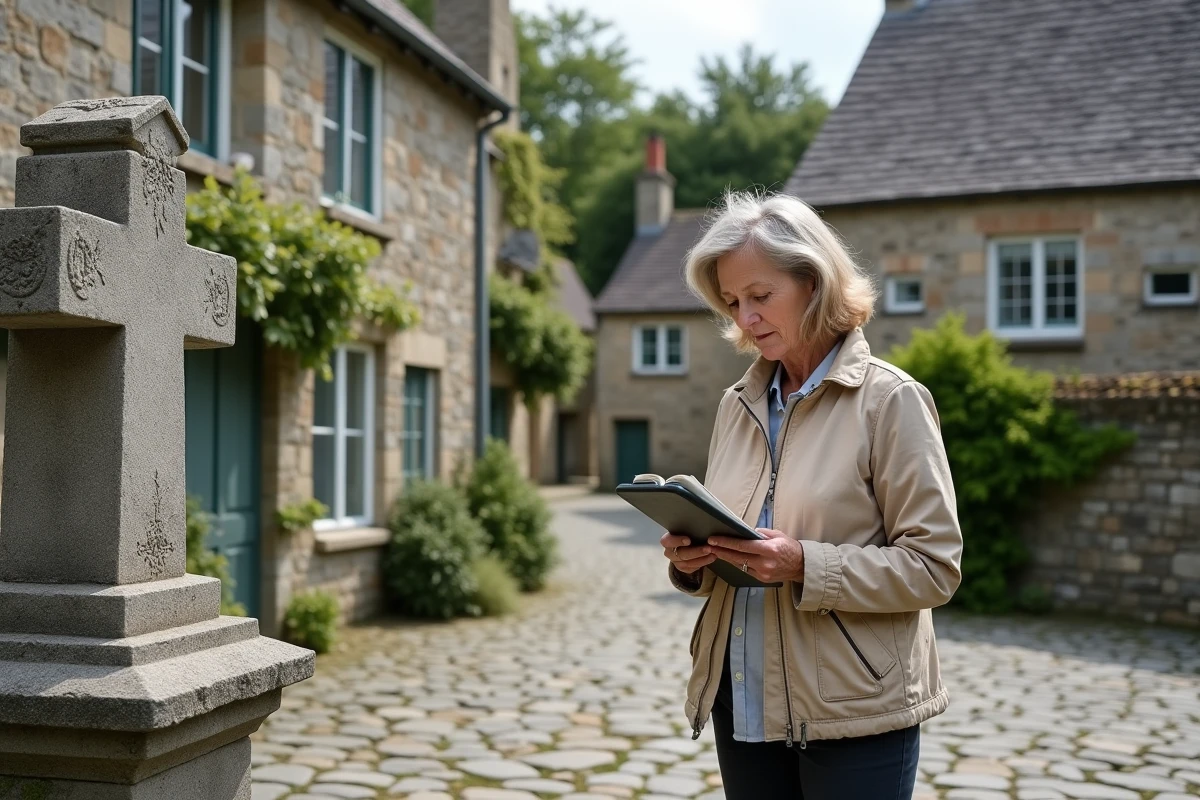
Ploubazlanec is inseparable from the history of cod fishing in Iceland, which marked the Goëlo from the mid-19th century to the early 20th century. The fishermen from Ploubazlanec and Paimpol embarked on campaigns lasting several months, often under fatal conditions.
The Wall of the Missing, located in the municipality, bears the names of sailors who died at sea during these campaigns. This monument is not a matter of folklore. It documents a demographic reality: entire families deprived of fathers and sons, a local economy built on a deadly risk.
Reading the Built Landscape as a Historical Document
The houses of Ploubazlanec and Paimpol bear traces of this era. The modest proportions of the dwellings, the orientation of the facades relative to the prevailing winds, and the presence of vegetable gardens responded to a logic of subsistence during the crews’ absence. The vernacular architecture of the Goëlo tells the story of the fishing economy as well as a history book.
The chapel of Perros-Hamon, on the municipal territory, reflects the role of religion in the lives of fishing families. The ex-votos and models of boats suspended in Breton chapels are not merely decorative: they materialized promises made in exchange for a safe return.
Slow Tourism and Soft Mobility around Ploubazlanec
Since 2022, the tourist offices of Guingamp-Paimpol Agglomeration have structured an offer of car-free slow tourism around the Guingamp-Paimpol train line, bus connections, and walking and cycling loops. The stated goal is to reduce the carbon footprint of the stay while providing access to Ploubazlanec and the embarkation point for Bréhat.
This approach changes how visitors engage with the territory. Arriving by train and then cycling to the tip of Arcouest imposes a slow pace that better matches the nature of the place than parking as close as possible to the embarkation point.
Bréhat without the Crowds: A Question of Rhythm
The island of Bréhat, accessible from the tip of Arcouest in the municipality of Ploubazlanec, attracts a concentrated tourist flow during a few months. Slow tourism offers a concrete alternative:
- Take the Guingamp-Paimpol train line, connected to the TGV network, then a shuttle or bike to the embarkation point, rather than searching for a parking spot crowded in summer
- Shift the visit to the off-season (April-May or September-October), when the low light of Trégor-Goëlo better reveals the colors of the pink granite and heathland
- Combine Bréhat with hiking loops on the GR34 around Ploubazlanec, so as not to reduce the stay to a round trip
Land Pressure and Second Homes on the Coast of Ploubazlanec
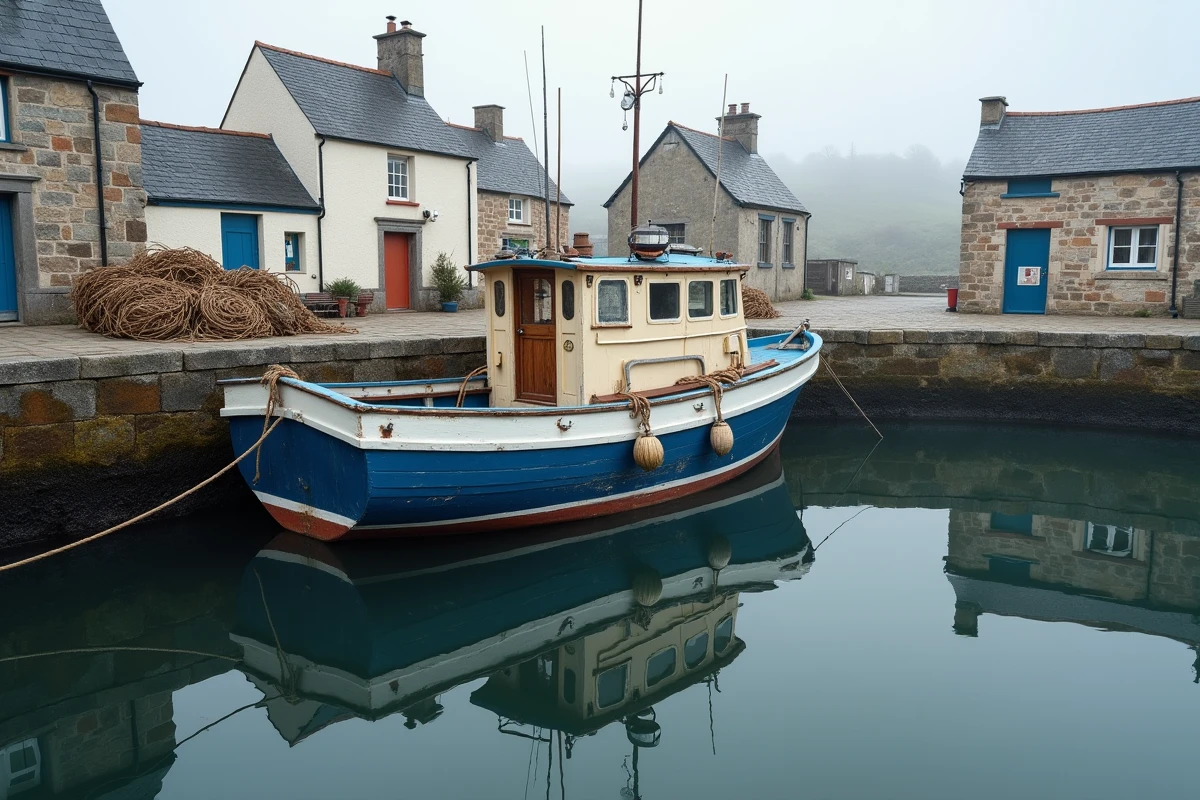
The beauty of the setting has a downside. The share of second homes in the Paimpol-Ploubazlanec area significantly exceeds the national average, according to INSEE data. This trend has intensified since the health crisis of 2020, with a noticeable increase in purchases by buyers from outside the region.
This land pressure reduces the housing supply for year-round residents and weakens the local social fabric. Businesses, schools, and health services depend on a sufficient permanent population. When the proportion of houses closed for ten months out of twelve increases, communal life dwindles.
Visiting Ploubazlanec consciously also means understanding this tension. Favoring accommodation with locals, guesthouses, or gîtes run by permanent residents contributes to a tourism economy that benefits the territory rather than just the real estate market.
The Trégor-Goëlo Beyond Ploubazlanec: A Coherent Network of Sites
Ploubazlanec is not an isolated point. The municipality is part of the Trégor-Goëlo, a geographical and cultural ensemble that stretches from Paimpol to Tréguier and beyond. The abbey of Beauport, a few kilometers away, the Talbert furrow (a unique pebble spit in Europe), and the pink granite coast form a network of sites accessible in a few days of walking or cycling.
What distinguishes this area from more media-covered Breton destinations, such as Saint-Malo or the Gulf of Morbihan, is the density of heritage relative to the number of visitors. Northern Côtes-d’Armor remains a territory where nature and built heritage can be discovered without queues, provided one accepts a slower pace and less standardized accommodation options.
Ploubazlanec functions as a discreet base camp for this network. The municipality does not have a unique spectacular monument, but it offers direct access to the intertidal zone, Bréhat, the GR34, and the maritime history of the Goëlo. It is precisely this modest crossroads position that makes it a more interesting starting point than a showcase destination.