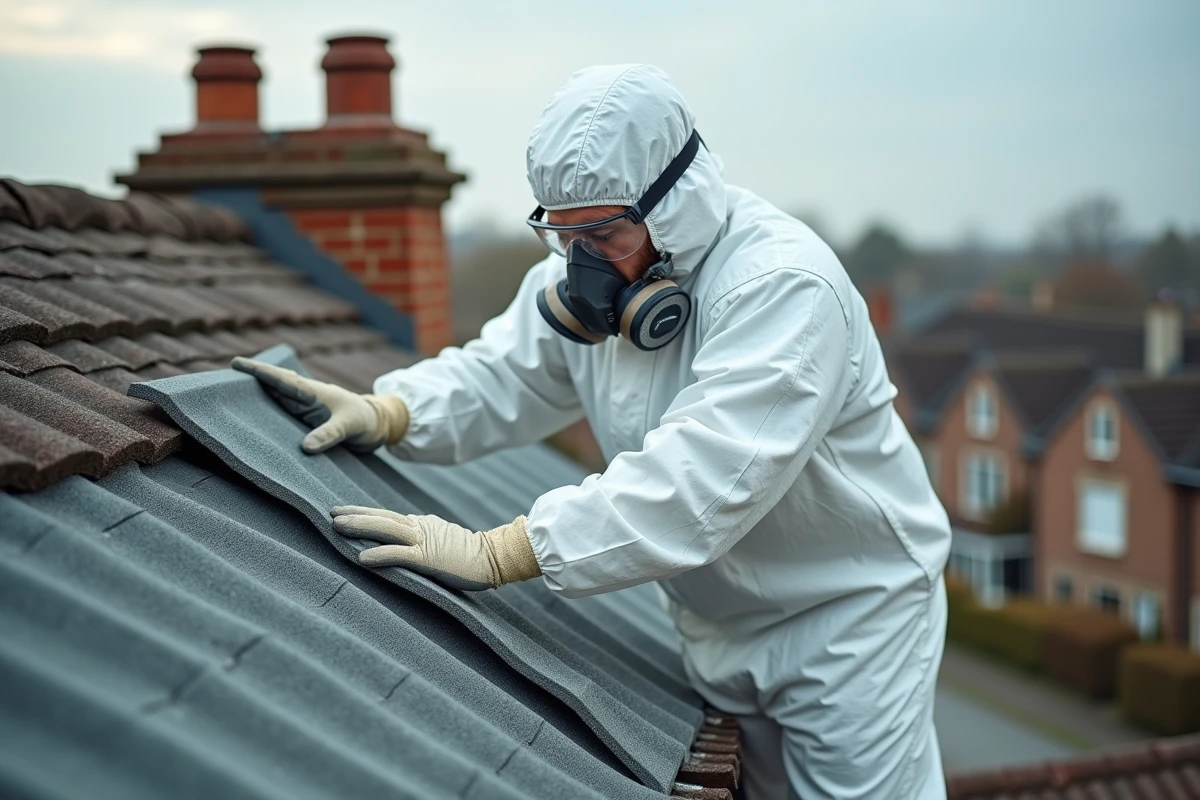
The asbestos removal of roofs involves several trades, preliminary diagnostics, and a strict regulatory framework. Before starting a project, the central question concerns the actual risk level of the materials in place and the constraints differences depending on the chosen method (removal, encapsulation, overlay). Comparing these approaches allows for measuring what separates a well-calibrated intervention from an underestimated project.
Removal, encapsulation, or overlay: a comparison of asbestos removal methods
Three strategies coexist to treat a roof containing asbestos. Each responds to different situations regarding budget, project duration, and required protection level.
| Method | Principle | Risk level for workers | Main regulatory constraint |
|---|---|---|---|
| Complete removal | Removal of asbestos sheets, waste treatment | High (release of fibers during cutting and handling) | Removal plan approved by labor inspection |
| Encapsulation | Application of a waterproof coating on asbestos materials | Moderate (no removal, but risk during surface preparation) | Asbestos diagnosis confirming the non-degraded state of the sheets |
| Overlay | Installation of a new covering over the existing one, without drilling | Low (no direct handling of asbestos) | Mandatory asbestos diagnosis before any intervention, verification of the load-bearing capacity of the framework |
Removal remains the only solution when the sheets are heavily degraded or friable. On the other hand, overlay without drilling is gaining ground on agricultural and industrial buildings where the framework can support the additional load. The choice directly depends on the state of degradation observed during the diagnosis.
To carry out the asbestos removal of a roof properly, the first step is to have an Asbestos Before Work Report (RAAT) conducted by an accredited diagnostician, regardless of the scenario considered.
RAAT and removal plan: the diagnostics that condition the project
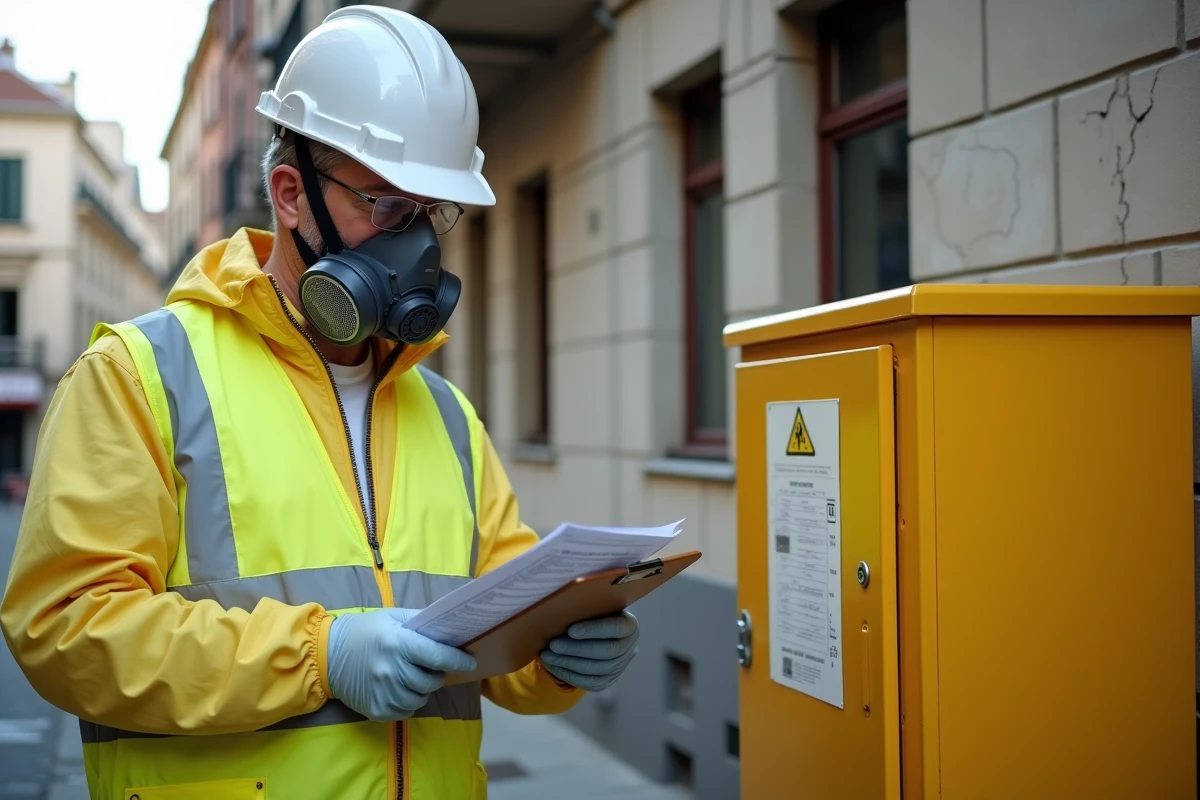
The RAAT is not limited to confirming the presence of asbestos. It identifies the type of fiber, locates contaminated materials (fiber cement sheets, joints, ducts), and estimates the quantities involved. This data conditions the operating mode of the certified company.
A point often overlooked: some roofs renovated after the storms of 1999 may mix new sheets and old asbestos sheets. The RAAT allows for distinguishing the areas to be treated from healthy areas, avoiding paying for asbestos removal on materials installed after the asbestos ban in 1997.
Removal plan or work plan
Depending on the estimated dust level, the company drafts either a removal plan (submitted to labor inspection) or a work plan. The removal plan details the removal method, the confinement of the area, collective and individual protections, as well as the disposal route for asbestos waste.
The labor inspection has a deadline to validate or request modifications. Starting the project before this validation exposes to an immediate halt of work and penalties.
Limit value of exposure and protections on the asbestos removal site
The professional exposure limit value (VLEP) to asbestos fibers has recently been tightened in France, forcing asbestos removal companies to adapt their operating methods. This gradual decrease in the VLEP imposes enhanced collective protections and stricter medical monitoring of exposed employees.
On an asbestos roof removal site, safety measures are organized around several axes:
- Confinement of the work area with tarps and suction devices with filtration, to prevent the dispersion of fibers into the ambient air
- Mandatory use of personal protective equipment (sealed suits, powered air-purifying respirators, gloves) for each worker in the asbestos area
- Systematic wetting of materials before cutting or removal, to reduce fiber emissions into the atmosphere
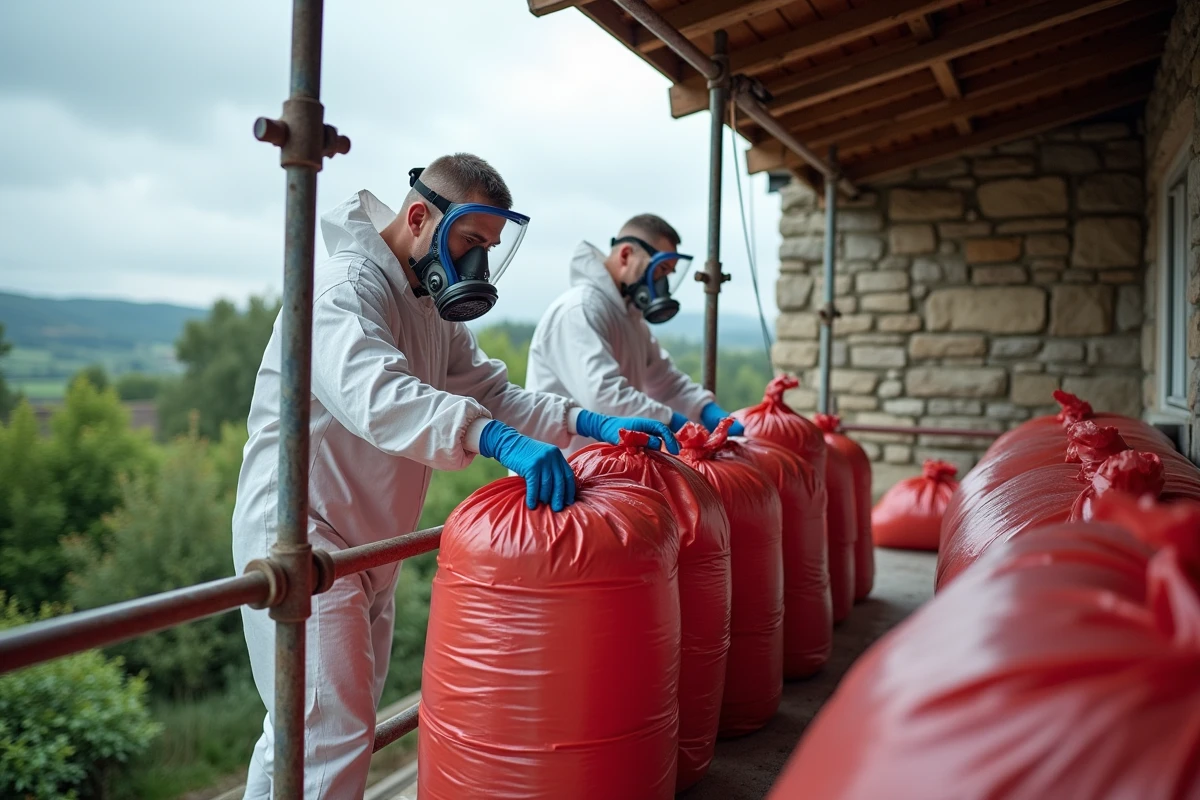
- Separate management of asbestos waste in sealed and labeled containers, transported to approved treatment centers
These constraints explain why only certified companies are authorized to carry out asbestos removal. A regular roofer, even if skilled, does not have the certification or the required equipment to handle asbestos materials.
Combining diagnostics to limit project rework
A trend is confirmed among condominiums and municipalities: combining asbestos diagnosis, framework inspection, and energy audit before launching roof renovation. The goal is to avoid costly and time-consuming project reopenings.
When asbestos removal is confirmed, the roof is completely stripped. This moment constitutes the ideal window to enhance insulation, check the condition of the framework, and review ventilation under the covering. Treating these items separately would involve re-installing and then removing the covering again, with significant additional costs.
Additional administrative authorizations
Depending on the municipality and the type of building, work authorizations on the roof may be added to the removal plan. Buildings located in protected or classified areas impose specific procedures with urban planning services. Checking these obligations before starting the project avoids blockages during the intervention.
The asbestos removal of roofs remains an intervention where the preparatory phase (RAAT, removal plan, grouping of diagnostics, authorizations) represents a significant part of the overall schedule. Underestimating this step prolongs the project and increases costs. The most determining factor for any arbitration remains the result of the RAAT: it guides the choice towards removal, encapsulation, or overlay, and sets the applicable safety framework for the entire operation.